2nd Phone Number - Call & Text
- 4.0
- Rating
- 10.00M
- Installs
- Free
- Price

 Analysis by App-foxy
If you need a separate number without carrying a second SIM card, 2nd Phone Number - Call & Text is a practical communication app worth considering. I found its main appeal very clear: it gives you a local US phone number for calls and texts, creating a useful boundary between your personal line and a specific part of your life. It is not a replacement for every mobile plan or a guaranteed solution for every verification task, but it can be a convenient second door into your phone.
My overall view is positive, with one important condition: you should treat it as a flexible communication tool rather than as a complete substitute for a carrier-issued number. The app is free to install, developed by TalkU International Inc., and aimed at Everyone. Its current version is 6.3.0, and it runs on Android 7.0 or later. Those details make it accessible to many people, while the in-app purchase range means the free starting point may not be the whole cost of long-term use.
What using a second number actually changes
The useful idea here is not simply having another line on the same handset. The real benefit is separation. I can imagine using one number for online selling, temporary projects, apartment inquiries, deliveries, or conversations where I do not want to immediately give out my everyday number. That separation makes it easier to keep personal calls and less important contacts from becoming mixed together.
You May Also Like

 Blood Strike: 2.5 Anniversary
Blood Strike’s Loadouts Turn Every Drop Into a Tactical Gamble
A close look at Blood Strike’s custom loadouts: how fast access to signature weapons reshapes its battle royale rhythm, rewards preparation, and narrows the gap between fights.

 Pandora - Music & Podcasts
Pandora’s Music Is Easy to Start, but Harder to Recover
Pandora’s strength is its low-effort path from a seed to a station. Its weak spot is how much confidence it asks you to place in connection, setup, and quiet recovery.

 8 Ball Pool
 Is Built on Rivalries, Rematches, and Routine
A close look at the rivalries, rematches, shared routines, and unanswered safety questions that turn a quick pool match into a persistent mobile community.

 Samsung Music
’s Quiet Strength Is Playing What You Already Own
Its reach comes less from spectacle than from dependable access to a personal library. That simplicity is both the app’s strongest retention engine and its ceiling.

 AccuWeather: Weather Radar
AccuWeather Review: A Quick, Clear Forecast for Everyday Decisions
For everyday plans, the best forecast is the one you can understand quickly. AccuWeather makes rain timing, radar, and local conditions easy to act on, with a few trade-offs.

 Hill Climb Racing
Why Hill Climb Racing Still Turns Crashes Into One More Run
A tiny car, a bumpy hill and one more upgrade: Hill Climb Racing keeps resurfacing because its simple chaos makes every near-miss feel personal.
More From Our News Desk



The app’s store summary focuses on privacy, and that is the right way to understand its strongest use case. A second number can reduce unnecessary exposure of your primary line, but it does not make you anonymous. The people you contact still know the number you choose to share, and normal judgment is still necessary when dealing with strangers. I would use it as a buffer, not as a promise that every interaction is private or risk-free.
For a person who travels between roles, the arrangement can be especially convenient. Someone who runs a small side business, rents out a room, coordinates local events, or occasionally sells used items may want a contact number that can be kept apart from family and close friends. Instead of carrying another phone, the user can keep both communication channels on one device. That is a much more comfortable workflow than constantly swapping SIM cards.
The local US number is also a meaningful limitation. If your contacts expect a number from another country, this is not the natural fit. Likewise, anyone who needs a standard carrier line for broad compatibility, emergency calling, or formal account recovery should think carefully before relying on an app-based number. The convenience is real, but it comes from flexibility rather than from being identical to a traditional mobile service.
A realistic everyday workflow
Imagine that I list a desk for sale online. I want interested buyers to reach me, but I do not want every inquiry connected to my personal number. I can share the second number, answer questions through the app, and keep the conversation separate from my normal call history and messaging habits. If the sale becomes inconvenient, I have not exposed the number that my family and regular contacts use.
That same workflow applies to freelance inquiries. I might use the extra line on a short project, place it on a simple contact card, or give it to customers who only need to reach me during a particular period. The advantage is not that the app magically organizes a business; it is that the number itself creates a clean boundary. I still need to manage conversations responsibly, but the separation starts at the point where I share contact details.
A less obvious benefit is reducing the mental clutter caused by temporary conversations. When a personal phone number is used for every one-off interaction, old contacts remain mixed with important ones. A dedicated number makes it easier to recognize which conversations belong to a particular purpose. That can be helpful when I am reviewing messages later and trying to remember why someone contacted me.
Calls and texts without carrying another device
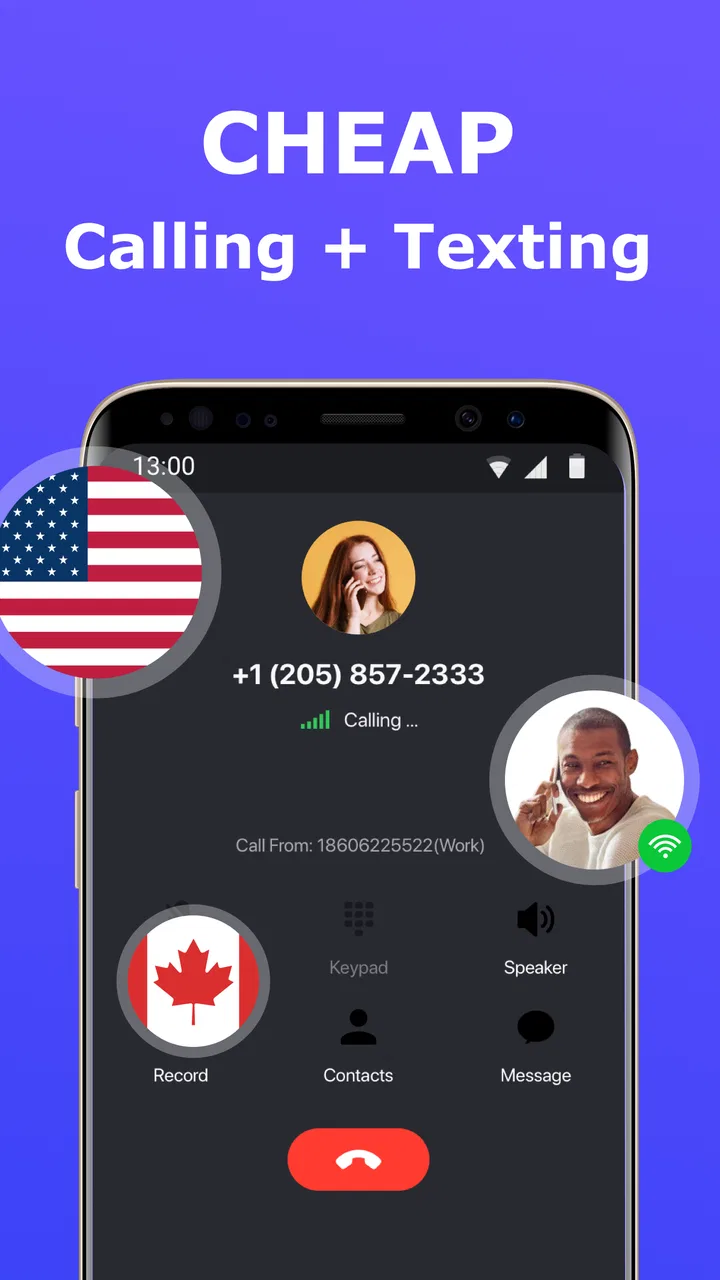
The core experience is straightforward: the app is designed for calling and texting through the additional US number. For someone who wants a second communication identity on an existing phone, that is more convenient than maintaining a separate handset. It also avoids the everyday annoyance of checking two physical devices for missed messages.
Still, I would not confuse convenience with carrier-level reliability. App-based communication depends on the phone, the app, and the available internet connection. A traditional cellular number may be the better choice for people who cannot tolerate uncertainty when receiving important calls. If your work depends on being reachable at all times, test the app in your normal locations before moving essential contacts to it.
There is another practical consideration: people calling the extra number may not know that it is app-based. That means you should explain how you prefer to communicate if a conversation is important. I would also keep my primary number available for close contacts and services where dependable carrier behavior matters more than privacy separation.
Where the free entry point becomes less simple
The app is free, which makes trying it relatively easy. However, in-app purchases range from $1.99 to $79.99 per item. That wide range is a reminder to check the purchase screen carefully before committing to anything. A user who only needs occasional communication may find the initial experience sufficient, while someone who expects heavy or continuous use should consider the likely ongoing expense before making the number central to a business workflow.
I appreciate that the free entry point lowers the barrier to testing the concept. At the same time, “free” should not be read as “unlimited in every situation.” Communication apps often become more valuable when a user needs more capacity or longer-term access, and that is where paid options can affect the decision. My advice is to start with a small, low-risk use case and see whether the number fits your routine before spending more.
This is also where the app compares differently with the usual alternatives. A second SIM or dual-SIM phone can provide a more traditional mobile identity, but it may require extra service costs, hardware support, or more complicated device management. A carrier add-on can be dependable, but it may be less flexible for a short project. Other internet calling services may offer different number choices or ecosystems, yet the attraction here is the focused idea of adding a US number for calls and texts without carrying another phone.
Privacy is useful, but it needs realistic expectations
The privacy angle is strongest when the goal is to avoid handing your main number to every person or service that needs a way to reach you. I would use the extra line for contacts that are useful but not yet trusted. That could include a buyer, a contractor, a new client, or someone responding to a public listing.
There are limits to this approach. A second number does not remove the need to recognize scams, avoid sharing sensitive information, or decide when a contact deserves access to your primary line. It also does not automatically solve identity checks. Some services may reject app-based numbers, and I would never build an important account-recovery strategy around a number before confirming that the service accepts it.
That last point is one of the most important trade-offs. If your only goal is receiving a one-time code, this may not be the right app to choose. If your goal is maintaining an ongoing conversation while keeping your personal number separate, the app makes much more sense. Those are very different needs, and the second one is where I see the clearest value.
Who will get the most from it
I think the best audience is people who need a temporary or purpose-specific communication channel. Freelancers, online sellers, renters, local organizers, and anyone who regularly deals with unfamiliar contacts can benefit from the extra layer of separation. Parents might also appreciate having a number for a child’s activities or a shared household task, provided everyone understands how the communication is being handled.
It can also suit people who want to test a small side project without publishing their personal number. The app lets them begin with less setup than buying another phone. That does not turn the number into a full business phone system, but it can be enough for a solo user who mainly needs calls and texts rather than advanced workplace tools.
I would be more cautious about recommending it to someone who needs a permanent primary number, guaranteed access in weak-data areas, or a number that every financial, government, and account-security service will accept. Those users should look first at a regular carrier line or another option with the exact compatibility they require. The app is at its best when flexibility and privacy separation matter more than formal permanence.
What the user experience asks from you
The app is easy to understand at the concept level, but the responsibility for managing the number remains with the user. Before sharing it widely, I would decide what the number is for and keep that purpose consistent. A number used for marketplace sales should not necessarily become the number for close personal relationships as well; the more clearly it is assigned, the more useful the separation becomes.
I would also make a habit of checking messages inside the app rather than assuming every important conversation will behave exactly like a normal carrier inbox. For a temporary project, I would keep a simple note of which contacts use the second number and why. That small habit prevents confusion later, especially if several short-term conversations overlap.
Another practical tip is to test both outgoing and incoming communication before publishing the number. Send a text to someone you trust, place a call, and ask that person to respond. This does not guarantee performance everywhere, but it confirms that the basic workflow makes sense on your phone and in your usual environment. It is a better approach than discovering a problem after posting the number publicly.
The app has attracted a substantial user base, with over 10 million installs, and its average rating is 4.0 from around 355 thousand ratings. I see those figures as evidence that the basic idea has broad appeal, not as proof that it will fit every individual situation. The rating feels consistent with a useful app that solves a clear problem while still leaving room for concerns about cost, compatibility, and the nature of internet-based calling.
How it compares with a second SIM and ordinary messaging apps
Compared with a second SIM, this app is simpler for someone who does not want to carry another device or change physical cards. A SIM-based line generally feels more like a conventional phone number, which can be preferable for reliability and broad acceptance. The app wins when the number is temporary, when the user wants quick separation, or when hardware convenience matters most.
Compared with ordinary messaging apps, the advantage is that the contact method is a phone number rather than an account that requires both people to use the same platform. That can make initial contact easier for people who simply want to call or text. On the other hand, a dedicated messaging platform may offer richer group features or a more established social circle, depending on what your contacts already use.
Compared with a business phone service, this is a lighter solution. A solo worker who only needs a separate number may prefer its simplicity, while a growing team may need shared inboxes, extensions, formal call routing, or administrative controls. I would not choose this app as the foundation of a larger support operation without checking whether its communication model matches that workload.
My final recommendation
After looking at the app as a real everyday tool, I think its central promise is credible and useful: one phone can hold a separate US number for calls and texts, giving the user more control over when to reveal a personal line. The strongest reason to install it is not novelty; it is the practical boundary between private communication and temporary or public-facing contact.
The meaningful weakness is that an app-based number should not automatically replace a carrier number. Compatibility, dependable access, and purchase requirements deserve attention, especially if the number will be used for important accounts or work. I would also avoid assuming that privacy means anonymity. The app can reduce exposure of your main number, but your own communication choices still matter.
For a free starting point, an Everyone rating, support for Android 7.0 and later, and a clear focus on calls and texts, it is an approachable option. The developer, TalkU International Inc., has kept the concept easy to understand, and the current version gives users a straightforward way to explore it. Just remember that in-app purchases from $1.99 to $79.99 per item can change the economics for heavier use.
My recommendation is simple: use 2nd Phone Number - Call & Text as a deliberate buffer, not as your only lifeline. If you regularly need to contact strangers, manage temporary projects, or keep a side activity away from your personal number, I think it is worth trying. If you need a permanent carrier-grade identity or guaranteed acceptance for sensitive services, choose a traditional mobile option instead.
FAQs for 2nd Phone Number - Call & Text
01What is the primary function of the 2nd Phone Number - Call & Text app?
The 2nd Phone Number - Call & Text app provides users with an additional phone number that can be used for calling and texting. This is particularly useful for maintaining privacy, managing business communications, or separating personal and professional contacts without needing a second physical device.
02Is the 2nd Phone Number - Call & Text app secure and private?
Yes, the app prioritizes security and privacy by ensuring that your personal information is not shared with others. The app uses encryption to protect messages and calls, providing a safe space for users who need an additional phone number for private communications.
03Can I choose my own number with the 2nd Phone Number - Call & Text app?
Yes, the app typically allows users to select a number from a list of available options based on their preferred area code. This feature is particularly beneficial for users who wish to have a local presence in a different region or state.
04Are there any additional costs associated with using the app?
While the app itself may offer a free trial or basic features, additional costs often apply for premium features, such as unlimited calling, texting, or international usage. It's important to review the pricing plans to understand any potential charges before committing.
05Does the 2nd Phone Number - Call & Text app support international calling and texting?
Yes, the app usually supports international calling and texting, making it a versatile option for users who communicate frequently across borders. However, users should check the specific rates and availability of these features based on their subscription plan.
Pros
- Easy setup with quick number activation.
- Offers multiple numbers for different needs.
- Affordable subscription plans available.
- Seamless call and text interface.
- Supports both local and international numbers.
Cons
- Occasional app crashes reported by users.
- Limited features in the free version.
- Requires stable internet connection.
- Some numbers may be recycled.
- Privacy concerns with call data storage.

2nd Phone Number - Call & Text
Gallery